

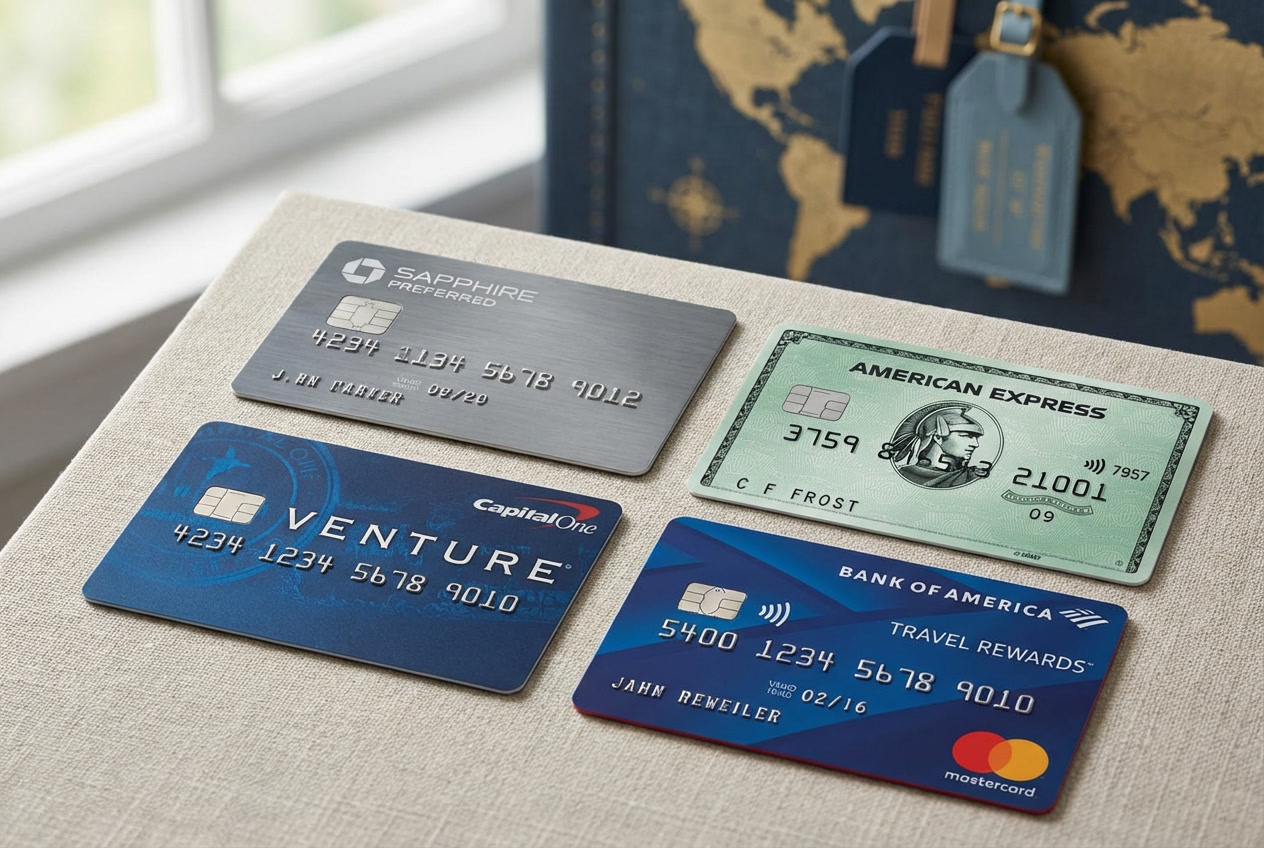

In 2026, travel credit cards are no longer complicated. Beginner-friendly cards now offer easy rewards, flexible points, and real travel perks — without premium fees or confusing rules.
Most starter travel cards earn rewards on dining, gas, groceries, and travel, letting you build points naturally — no advanced strategies required.
Many beginner cards in 2026 come with $0–$95 annual fees, no foreign transaction fees, and welcome bonuses worth $200–$800+ in travel.
Redeem points through bank travel portals or transfer to airline and hotel partners — whichever gives you the best value for your trip.
-
Who are beginner travel cards designed for?+
They’re ideal for people earning travel rewards for the first or second time who want value without complexity or high annual fees.
-
Do beginner travel cards include travel protections?+
Yes. Many now include trip delay coverage, rental car insurance, baggage protection, and purchase protection at no extra cost.
-
What credit score do I need?+
Most beginner travel cards approve users with fair to good credit, typically starting around the high-600s, depending on the issuer.
-
Are points better than airline miles for beginners?+
Usually yes. Bank points offer more flexibility and can be used for flights, hotels, or transfers to multiple travel partners.
Travel credit cards used to feel complicated. Too many rules, confusing point systems, and high annual fees made them intimidating — especially for beginners. In 2026, that’s no longer the case.
Banks have clearly shifted their focus toward first-time travel card users. The result? Easier approval paths, straightforward rewards, and real travel perks that don’t require a premium commitment.
If you want to start earning points or miles — without turning travel rewards into a second job — this guide will help you choose the right card with confidence.
Why Beginner Travel Cards Are Better Than Ever
Modern entry-level travel cards are designed to remove friction. Instead of forcing you to learn complex loyalty programs, they reward normal spending and give you flexibility when it’s time to redeem.
Most beginner-friendly travel cards in 2026 now include:
- Bonus points for dining, gas, and everyday purchases
- Welcome offers that can cover a roundtrip flight or hotel stay
- No foreign transaction fees, making them travel-ready
- Travel protections like trip delay, baggage coverage, and rental car insurance
- Simple redemption options through bank travel portals
- In some cases, airport lounge day passes or small travel credits
You don’t need advanced strategies to benefit — just consistent use and on-time payments.
Who Travel Starter Cards Are Built For
Beginner travel cards are a smart choice if you:
- Are earning travel rewards for the first or second time
- Plan to travel within the next year
- Have fair to excellent credit
- Want meaningful perks with a $0–$95 annual fee
- Prefer flexible bank points instead of being tied to one airline
For many people who travel once or twice a year, these cards offer better value and less stress than premium cards.
How Travel Cards Work (Without the Jargon)
Here’s what using a travel credit card actually looks like in practice:
- You check eligibility online — usually without affecting your credit score
- Once approved, you earn a welcome bonus after meeting a spending requirement
- Everyday purchases like groceries, dining, gas, and travel earn points or miles
- You redeem rewards through a travel portal or by transferring to partners
- You automatically receive protections when traveling, at no extra cost
The key rule is simple: pay your balance in full each month so rewards don’t get wiped out by interest.
Strong Beginner Travel Cards to Consider in 2026
Rather than ranking cards by hype, it’s more useful to match them to travel styles.
- Best all-around starter card: Chase Sapphire Preferred® — flexible points, strong travel protections, and excellent long-term value.
- Best no-annual-fee travel card: Capital One VentureOne Rewards — simple earning structure with no yearly cost.
- Best for simplicity and fair credit: Discover it® Miles — easy rewards and a first-year miles match.
- Best for everyday spending: Wells Fargo Autograph℠ — strong earnings on travel, dining, and gas without an annual fee.
- Best hybrid cash back + travel option: Chase Freedom Unlimited® — solid everyday rewards that convert well for travel.
- Best for heavy dining spenders: U.S. Bank Altitude® Go — high rewards on dining with no annual fee.
🆕 2026 trend: Several beginner cards now include small annual travel credits or occasional lounge access — perks that used to be exclusive to premium cards.
Advantages and Limitations to Expect
Why beginner travel cards work well:
- Lower barriers to entry
- Competitive welcome bonuses
- Useful perks without high fees
- Strong rewards on everyday spending
- Flexible redemption options
Where they fall short:
- Unlimited lounge access remains a premium feature
- Fewer airline partners compared to high-end cards
- Best value may require booking through a travel portal
- Some issuers are stricter with thin credit histories
These trade-offs are normal — and often worth it for the simplicity they offer.
Choosing Your First Travel Card in 2026
The best beginner travel card isn’t the one with the biggest annual fee or flashiest perks. It’s the one that fits how you already spend and travel.
- Want flexibility and long-term growth? Chase Sapphire Preferred®
- Want zero fees and low commitment? Capital One VentureOne
- Want easy rewards while building credit? Discover it® Miles
- Spend a lot on gas and dining? Wells Fargo Autograph℠
Start simple, use the card responsibly, and let your rewards grow naturally.
👉 Check your eligibility for beginner travel credit cards in 2026 — most issuers offer pre-qualification with no impact on your credit score.
You will remain on the current site

 Best Credit Cards for High Spenders (>$5k/month) in 2026 <p class='sec-title' style='line-height: normal; font-weight: normal;font-size: 16px !important; text-align: left;margin-top: 8px;margin-bottom: 0px !important;'>Top Premium Credit Cards That Maximize Rewards for $5k+ Monthly Spenders</p>
  Best Credit Cards for Groceries, Gas & Dining in 2026 — Real Savings on What You Buy Every Week <p class='sec-title' style='line-height: normal; font-weight: normal;font-size: 16px !important; text-align: left;margin-top: 8px;margin-bottom: 0px !important;'>How the Right Card Can Turn Groceries, Gas, and Dining Into $400–$900 in Annual Savings</p>
  Best Credit Cards for Bad Credit in 2026: Rebuild Your Credit Without Paying Annual Fees <p class='sec-title' style='line-height: normal; font-weight: normal;font-size: 16px !important; text-align: left;margin-top: 8px;margin-bottom: 0px !important;'>Fast Approval Options That Help You Improve Your Score Safely</p>