

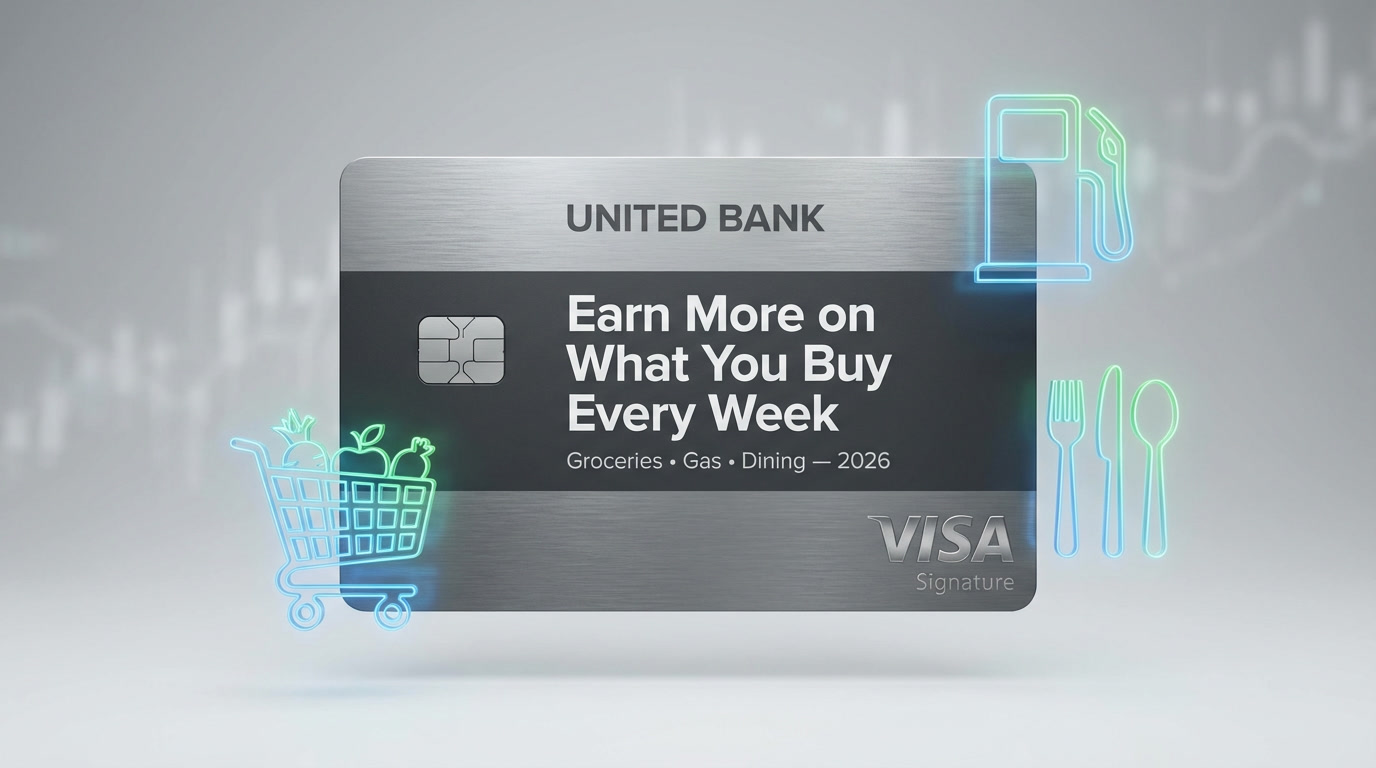

Groceries, gas, and dining are where most monthly spending happens. In 2026, the right credit card can quietly return hundreds of dollars per year on purchases you already make.
Top everyday spending cards offer elevated rewards on groceries, gas stations, and restaurants, often outperforming premium cards over time when used consistently.
Some cards shine for heavy grocery budgets, others adapt to your top category automatically, while some reward users willing to activate rotating bonuses.
You don’t need complex tactics. Matching the right card to each purchase — and paying balances in full — is often enough to unlock $400–$900 in yearly savings.
-
Why are grocery, gas, and dining cards so valuable?+
Because these categories represent consistent, unavoidable spending — earning extra rewards here compounds month after month.
-
Are no-annual-fee cards good enough for everyday spending?+
Yes. Many $0 annual fee cards now offer competitive rewards on food and fuel without requiring long-term commitment.
-
Do rotating category cards require more effort?+
Some do. You may need to activate categories quarterly, but the higher reward rates can be worth it for engaged users.
-
How do I avoid losing rewards to interest?+
Always pay your balance in full. Interest charges can easily outweigh any cash back or points earned.
When you look at where most people actually spend their money, it’s rarely on luxury items. The bulk of monthly expenses usually comes down to groceries, fuel, and food outside the house. That’s exactly why credit card issuers continue to fight hard in these categories.
In 2026, choosing the right card for everyday spending can easily put hundreds of dollars back in your pocket each year — often without any change in habits. The key is matching your spending style with the right reward structure.
Below is a practical, no-fluff breakdown of the best cards for groceries, gas, and dining — and how to decide which one fits your routine.
Why Everyday Spending Cards Matter More Than You Think
Big welcome bonuses are great, but long-term value usually comes from consistent rewards on daily purchases. A card that earns an extra 2–4% on groceries or dining can outperform many “premium” cards over time.
If you regularly buy groceries, drive weekly, or eat out often, these categories can quietly generate $400–$900 per year in cash back or rewards.
The Strongest Options for Food & Fuel in 2026
Instead of ranking cards in a simple list, it’s more helpful to group them by spending behavior.
Best Choice for High Grocery Budgets
If groceries are one of your largest monthly expenses, the Blue Cash Preferred® Card from American Express continues to stand out.
It offers an industry-leading return at U.S. supermarkets, making it ideal for families and households with steady grocery spending. The annual fee is easily justified for users who hit the higher end of the grocery cap.
Works best for: families, meal planners, and bulk grocery shoppers.
Best No-Annual-Fee Card for Food & Dining
For people who want strong rewards without committing to an annual fee, the Capital One SavorOne® Cash Rewards card remains one of the most balanced options.
It earns solid cash back on groceries and dining, along with entertainment and streaming — all without requiring category activation or tracking limits.
Works best for: everyday spenders who value simplicity and flexibility.
Best Card That Adapts to Your Spending
If your monthly spending shifts between groceries, gas, and dining, the Citi Custom Cash℠ Card is uniquely useful.
It automatically earns its highest rate on your top spending category each month, removing the need to guess or plan ahead.
Works best for: people with changing habits or uneven monthly expenses.
Best Option for Bonus Category Maximizers
For those willing to be a bit more hands-on, the Chase Freedom Flex℠ can deliver excellent value.
Its rotating 5% categories often include groceries or gas, and dining earns bonus rewards year-round. With no annual fee, it’s a favorite among strategic users.
Works best for: people who don’t mind activating categories quarterly.
Who Benefits the Most From These Cards
These everyday spending cards tend to shine if you:
- Spend consistently on groceries and food
- Drive regularly and buy gas weekly
- Order takeout or eat out multiple times a month
- Prefer cash back over points or miles
- Are open to using one or two cards strategically
Even modest spending can add up quickly when paired with the right rewards.
A Simple Way to Maximize Your Returns
You don’t need advanced tactics to get strong value. A basic approach works well:
- Use the card that offers the highest rate for each purchase.
- Prioritize cards with easy-to-earn welcome bonuses.
- Watch for reward caps on grocery spending.
- Redeem rewards as statement credits or deposits for real savings.
- Always pay balances in full to avoid interest wiping out your gains.
Consistency matters more than complexity.
Comparing the Cards at a Glance
| Card | Grocery Rewards | Gas Rewards | Dining Rewards | Annual Fee | Best Use Case |
|---|---|---|---|---|---|
| Amex Blue Cash Preferred | High | Moderate | Low | $95 | Heavy grocery spend |
| Capital One SavorOne | Moderate | Moderate | Moderate | $0 | Everyday food spending |
| Citi Custom Cash | Flexible | Flexible | Flexible | $0 | Changing monthly habits |
| Chase Freedom Flex | Rotating | Rotating | Solid | $0 | Bonus category users |
Strengths and Trade-Offs to Keep in Mind
What works well:
- High returns on essential spending
- Multiple strong no-annual-fee options
- Easy-to-understand rewards
- First-year bonuses that boost savings
- Broad approval access
Potential drawbacks:
- Some cards limit grocery rewards annually
- Rotating categories require activation
- American Express acceptance, while improved, isn’t universal
Final Thoughts: Choosing the Right Card in 2026
There’s no single “best” card — only the best fit for your spending pattern.
- Large grocery bills → Amex Blue Cash Preferred
- No annual fee and simplicity → Capital One SavorOne
- Spending varies month to month → Citi Custom Cash
- Willing to optimize categories → Chase Freedom Flex
When matched correctly, these cards turn everyday purchases into real savings.
👉 Check your pre-qualification for top grocery, gas, and dining cards in 2026 — it takes just minutes and won’t affect your credit score.
You will remain on the current site

 Best Credit Cards for High Spenders (>$5k/month) in 2026 <p class='sec-title' style='line-height: normal; font-weight: normal;font-size: 16px !important; text-align: left;margin-top: 8px;margin-bottom: 0px !important;'>Top Premium Credit Cards That Maximize Rewards for $5k+ Monthly Spenders</p>
  Best Credit Cards for Bad Credit in 2026: Rebuild Your Credit Without Paying Annual Fees <p class='sec-title' style='line-height: normal; font-weight: normal;font-size: 16px !important; text-align: left;margin-top: 8px;margin-bottom: 0px !important;'>Fast Approval Options That Help You Improve Your Score Safely</p>
  Best Travel Credit Cards for Beginners in 2026: A Simple Way to Start Earning Points & Miles <p class='sec-title' style='line-height: normal; font-weight: normal;font-size: 16px !important; text-align: left;margin-top: 8px;margin-bottom: 0px !important;'>Start Earning Flights and Hotel Nights Without Complexity</p>